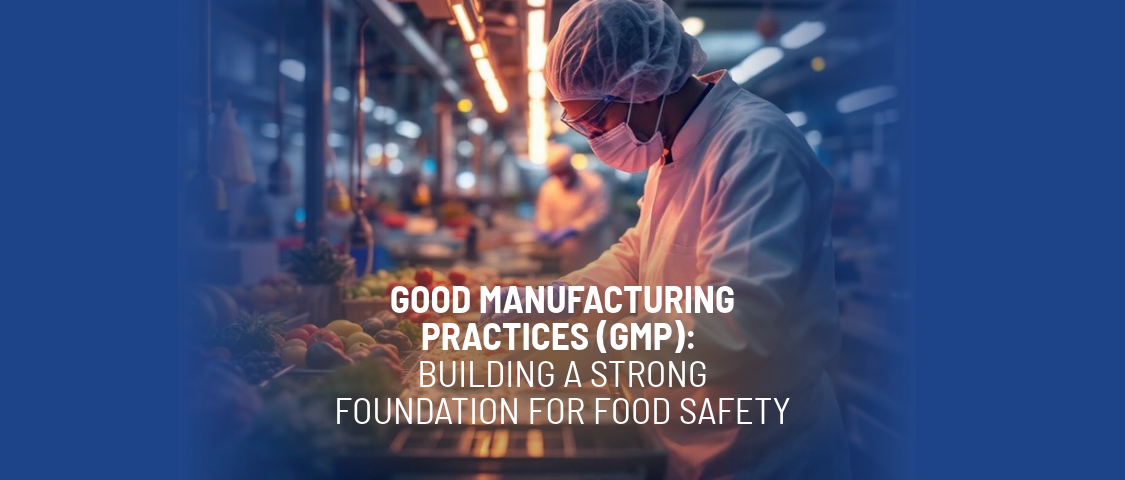

Food safety is one of the most important responsibilities in the food manufacturing industry. From handling raw materials to packaging and distribution, every stage of production can introduce risks that affect product quality and consumer health.
Good Manufacturing Practices (GMP) provide a structured approach to controlling these risks. They establish the basic conditions and operational practices organizations should maintain to produce food safely, consistently, and under controlled conditions.
For food manufacturers, processors, and packaging facilities, implementing effective GMP is an essential step toward building a reliable food safety system.
What Are Good Manufacturing Practices (GMP)?
Good Manufacturing Practices are guidelines and operational requirements designed to help prevent contamination and ensure that food products are manufactured under appropriate hygienic conditions.
They address the people, facilities, equipment, materials, and processes involved in food production.
In the United States, the Food and Drug Administration (FDA) establishes Current Good Manufacturing Practice (CGMP) requirements for human food under 21 CFR Part 117. These requirements cover areas such as employee hygiene, facility maintenance, sanitation, equipment, and production controls.
Although specific requirements vary depending on the country, product, and applicable regulations, the objective remains the same: preventing food safety hazards before they affect the final product.
Key Elements of Good Manufacturing Practices in Food Safety
An effective GMP program requires consistent attention to several operational areas.
1. Personal Hygiene and Employee Training
Employees play a critical role in food safety. Improper hygiene practices can introduce biological, chemical, or physical contamination into production environments.
Organizations should establish clear procedures for handwashing, protective clothing, personal cleanliness, and reporting illnesses or conditions that could affect food safety.
Regular employee training is equally important. Workers must understand their responsibilities and know how to follow established hygiene and handling procedures.
2. Facility Design and Maintenance
Food production facilities should be designed and maintained to support hygienic operations and minimize contamination risks.
This includes appropriate ventilation, adequate lighting, suitable drainage, cleanable surfaces, and effective separation of activities where necessary.
Maintenance programs should also address building conditions, equipment, and infrastructure to prevent physical deterioration from affecting food safety.
3. Cleaning and Sanitation Procedures
Cleaning and sanitation are essential components of GMP.
Organizations should establish documented procedures that identify what needs to be cleaned, how frequently cleaning must occur, which methods and products should be used, and who is responsible.
Regular verification helps confirm that sanitation activities are being performed effectively and that production areas remain suitable for food handling.
4. Equipment and Process Controls
Food processing equipment must be appropriate for its intended use, properly maintained, and cleaned according to established procedures.
Organizations should also monitor relevant production parameters, such as temperature, processing time, and storage conditions, depending on the product and associated hazards.
Consistent process controls help reduce variations and prevent conditions that could compromise food safety.
5. Raw Material and Supplier Management
Food safety begins before production.
Organizations should establish procedures for evaluating suppliers, inspecting incoming materials, and ensuring that ingredients and packaging materials meet defined requirements.
Proper storage, inventory management, and traceability also help prevent contamination, deterioration, and the unintended use of unsuitable materials.
6. Documentation and Recordkeeping
Documented procedures and accurate records provide evidence that food safety practices are being followed.
Organizations should maintain appropriate records for cleaning activities, employee training, equipment maintenance, inspections, monitoring activities, and corrective actions.
Good documentation also makes it easier to identify recurring issues and demonstrate that established controls are being maintained.
How GMP Supports a Food Safety Management System
GMP provides the operational foundation for a broader food safety management approach. Many of these practices function as prerequisite programs (PRPs), which establish the basic environmental and operational conditions necessary for producing safe food.
However, GMP alone does not replace a complete food safety management system.
ISO 22000, an internationally recognized standard for Food Safety Management Systems (FSMS), provides a structured framework that builds on these fundamental practices. It integrates prerequisite programs with hazard analysis, HACCP principles, operational controls, and management system requirements.
For example, sanitation procedures, employee hygiene, equipment maintenance, and supplier controls are essential practices that support the effective implementation of a food safety management system.
While GMP helps establish safe manufacturing conditions, ISO 22000 provides a broader approach to identifying, preventing, and controlling food safety hazards throughout the organization.
When these practices are consistently implemented and supported by an effective management system, organizations can achieve better operational control, strengthen accountability, and improve food safety performance.
Common GMP Challenges in Food Manufacturing
Even organizations with established procedures can experience difficulties maintaining consistent GMP practices.
Some common challenges include:
- Inconsistent employee practices: Procedures may exist, but employees do not always follow them consistently.
- Insufficient training: Workers may not fully understand hygiene requirements or contamination risks.
- Inadequate documentation: Missing or outdated records make it difficult to verify compliance.
- Poor maintenance and sanitation: Inconsistent cleaning or equipment maintenance can increase contamination risks.
- Limited monitoring: Organizations may implement controls without regularly evaluating whether they remain effective.
Addressing these challenges requires management commitment, employee participation, regular monitoring, and periodic evaluation of food safety practices.
Internal audits can also help organizations identify gaps, verify the implementation of established procedures, and determine opportunities for improvement.
Strengthen Your Food Safety Practices
Good Manufacturing Practices are more than a set of housekeeping rules. They are an essential part of protecting consumers, maintaining operational consistency, and supporting a strong food safety culture.
For food manufacturers and processors, the goal should be to move beyond simply having written procedures and ensure that GMP principles are consistently applied throughout daily operations.
A well-maintained GMP program, supported by appropriate food safety management practices, helps organizations control risks, strengthen accountability, and demonstrate their commitment to producing safe food.
How ISO 9001 Can Benefit Food Manufacturing Companies
In addition to implementing Good Manufacturing Practices, food manufacturing companies can strengthen their operations through an ISO 9001 Quality Management System (QMS).
ISO 9001 provides an internationally recognized framework for managing quality, controlling processes, meeting customer requirements, and continually improving organizational performance.
For food manufacturers, implementing ISO 9001 can help establish more consistent production processes, improve supplier management, maintain effective documentation, define employee responsibilities, and address operational issues through corrective actions.
While ISO 9001 does not specifically establish food safety requirements or replace GMP, HACCP, or ISO 22000, it provides a structured approach to managing quality across the organization.
By combining effective manufacturing practices with a well-implemented Quality Management System, food companies can strengthen operational consistency, improve customer confidence, and support long-term business growth.
For organizations seeking to demonstrate their commitment to quality, ISO 9001 certification is an important step toward establishing a more structured and reliable management system.
Strengthen Your Food Manufacturing Operations
Good Manufacturing Practices are more than a set of housekeeping rules. They are an essential part of protecting consumers, maintaining operational consistency, and supporting a strong food safety culture.
For food manufacturers and processors, the goal should be to ensure that GMP principles are consistently applied throughout daily operations.
A structured Quality Management System can further support these efforts by improving process control, documentation, supplier management, and continual improvement.
Is your organization ready to strengthen its quality management system?
ISO 9001 certification can help demonstrate your organization’s commitment to consistent processes, customer satisfaction, and continual improvement.
Contact ISO Certifications Group (ICG) to learn more about the ISO 9001 certification process.
About The Author
Oscar Combs is the President of ISO Certifications Group, a certification body headquartered in Houston, Texas. With over 31 years of experience in the field, he is recognized as an expert in management systems that help organizations manage risk and improve operational efficiency.
ISO Certifications Group
ISO Certifications Group is an accredited ISO certification body that certifies ISO 9001, ISO 14001, ISO 45001 and ISO 50001 Management Systems for organizations. Contact us at info@isocertificationsgroup.com for more information or www.isocertificationsgroup.com.